
The Difference Between a POLST and a DNR
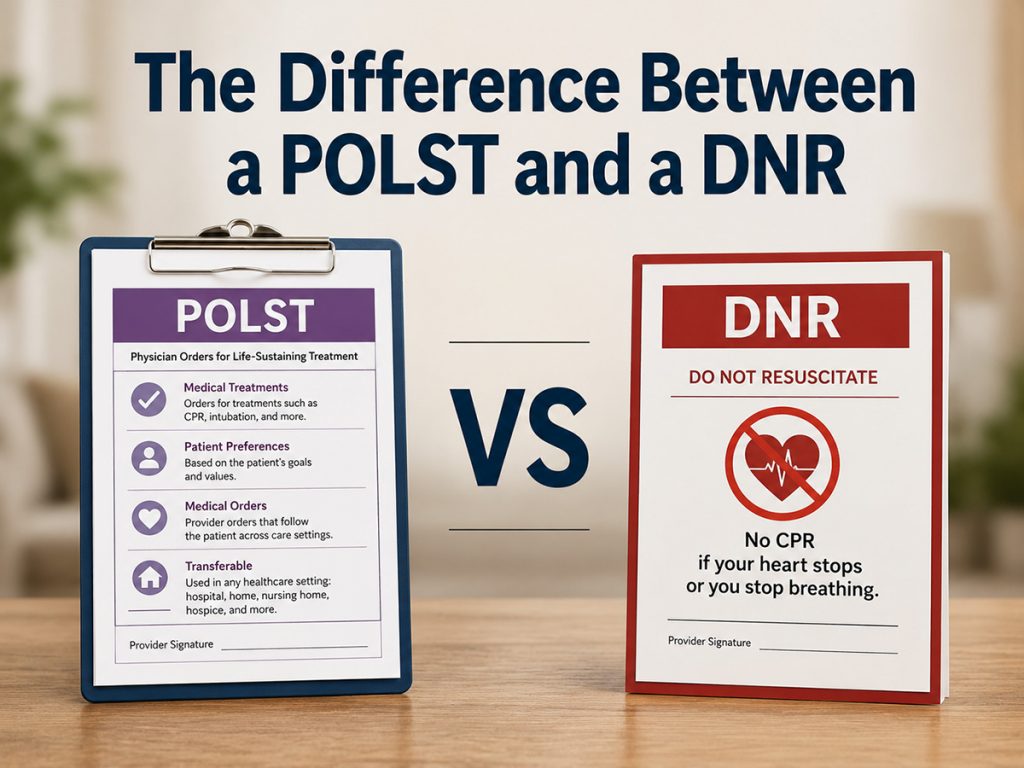
What is a POLST vs a DNR?
Many doing their asset protection and estate planning don’t fully understand the difference in a POLST vs a DNR.
In my law practice, I meet many prospective clients who have heard of a DNR (Do Not Resuscitate). However, most people have never heard of a POLST. POLST stands for Physician Orders for Life-Sustaining Treatment. Both are medical documents used in end-of-life and emergency care planning. Yet, they serve different purposes and apply in different situations.
Understanding the distinction between the a POLST vs a DNR can help patients, caregivers, and families make informed decisions about medical treatment and personal wishes.
A DNR Addresses Resuscitation
A DNR order, is a medical order that instructs healthcare providers not to perform CPR (cardiopulmonary resuscitation) if a person’s heart stops beating or if they stop breathing. CPR may include chest compressions, electric shocks, medications, or artificial ventilation intended to restart the heart or breathing.
In general, a DNR is used by people who are seriously ill, elder, or who do not wish to undergo aggressive life-saving measures that may not improve their quality of life. The document is written by a physician or authorized healthcare provider after discussing the patient’s wishes.
As you can see, the focus of a DNR is very narrow: it only addresses resuscitation. It does not provide instructions about other medical treatments such as feeding tubes, antibiotics, pain management, or hospitalization. A person with a DNR can still receive full medical treatment in every other respect unless additional directives are in place.
A POLST Is More Comprehensive
Unlike a DNR, a POLST covers a broad range of medical decisions beyond CPR. It is designed for those with serious illnesses, advanced frailty, or life-limiting conditions. A POLST is completed after a detailed conversation between the patient and a healthcare professional. The document is then signed by both the patient (or legal representative) and the clinician, making it an actionable medical order.
Typically, a POLST form includes instructions regarding:
- Whether CPR should be attempted
- Use of mechanical ventilation
- Hospitalization preferences
- Intensive care treatment
- Artificial nutrition and feeding tubes
- Comfort-focused care and pain management
Because it contains detailed medical instructions, a POLST is especially useful during medical emergencies when patients may be unable to communicate their wishes. Emergency medical personnel, hospitals, and long-term care facilities follow the instructions listed on the POLST form.
The Difference Is The Level of Detail
The important difference between a DNR and a POLST is the level of detail. While both documents are used during emergencies, a POLST provides much more guidance to emergency responders and clinicians. It helps ensure that treatment decisions align with the patient’s goals and values.
Choosing the right option between a POLST vs a DNR…
The choice between a POLST and a DNR depends one’s health condition, goals, and desired level of medical intervention. Someone who only wants to avoid CPR may choose a DNR alone while someone with a complex or advanced illness may benefit from a POLST because it provides more detailed instructions.
It is important to discuss these decisions with physicians, family members, and trusted caregivers. Laws and forms can vary by state, so professional medical and legal guidance is helpful.
Why These Documents Matter
Medical crises can happen suddenly, leaving patients unable to communicate. POLST and DNR forms help ensure that healthcare professionals respect your treatment preferences. They also reduce confusion and emotional stress for family members who might otherwise be forced to make difficult decisions without guidance.
These forms can improve quality of care by aligning medical treatment with your personal values, religious beliefs, and quality-of-life goals. For some people, the priority may be extending life as long as possible, while for others, comfort and dignity may take precedence over invasive procedures.
Relationship to Advance Directives
A DNR and a POLST are both medical orders, but they differ from advance directives such as living wills or healthcare powers of attorney used in healthcare planning. Advance directives are legal documents that describe future wishes and appoint decision-makers, while POLSTs and DNRs are actionable medical orders that healthcare providers follow immediately. A POLST very often complements an advance directive by translating your preferences into clear medical instructions. If you would like to discuss healthcare planning for the future, give my office a call at 404-549-5001.
Looking to find an experienced estate lawyer in the Georgia area who is skilled in asset protection and estate plan preparation? Shannon Pawley is an attorney in Georgia with expertise in estate planning and asset protection. Shannon can provide assistance with creating an estate plan to include making a will and how to establish a trust properly. If you have questions about asset protection or questions about making an estate plan, reach out to Shannon and she will be glad to help answer all the estate planning questions you might have!