
The Child Who Moved In: When a Parent Can Transfer the Home Without a Medicaid Penalty
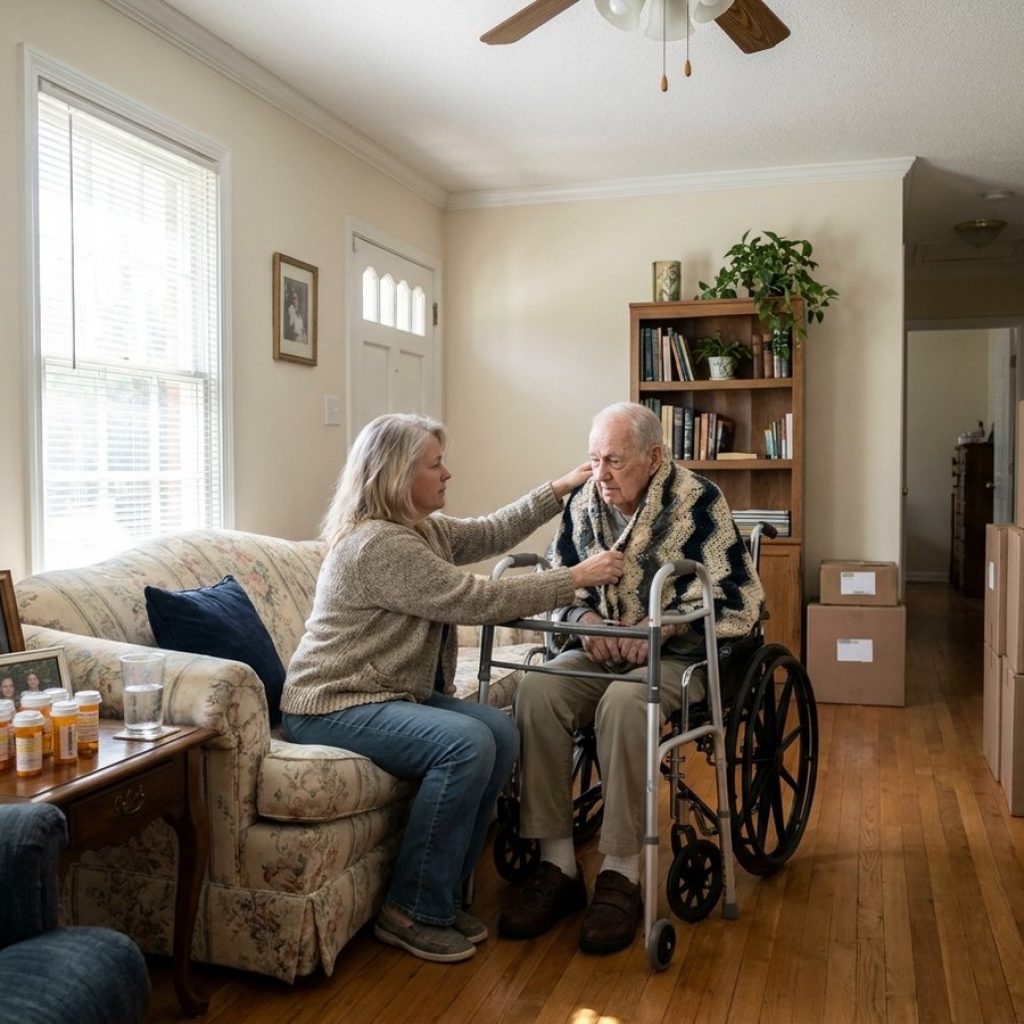
Imagine a daughter who moved back into her mother’s house four years ago. It was supposed to be temporary. Her mother had a bad fall, could not manage the stairs or the medications alone, and the alternative was a facility.
Four years later the daughter is still there. She gave up her apartment. She works a reduced schedule. She gets up twice a night. Her mother is still in her own home, which is the only thing either of them ever wanted, and it is entirely because her daughter is in the next room.
Now her mother’s condition has reached the point where a nursing home is unavoidable, and somebody tells the family that transferring the house to the daughter would be a penalized gift.
Usually that is true. In this particular situation, it may not be.
What the Exception Is
Federal Medicaid law penalizes transfers made for less than fair market value inside the five year lookback. There is a short list of transfers that are specifically exempt from that rule, and one of them exists for exactly the daughter in that story.
It is usually called the caretaker child exception or the child caregiver exemption. It allows a parent to transfer the home to an adult child without a transfer penalty, where that child lived in the home and provided care that kept the parent out of an institution.
This is not a loophole somebody discovered. Congress wrote it on purpose, because a child who does that work has saved the Medicaid program the cost of years of facility care, and the law recognizes it.
The Conditions, and They Are Strict
Every one of these has to be satisfied.
The child must be a biological or adopted son or daughter. Not a stepchild, not a grandchild, not a niece or nephew, not a daughter in law, however devoted. This is the condition that disqualifies the most families, and it is not negotiable.
The child must have lived in the parent’s home for at least two years immediately before the parent entered the nursing home. Living nearby does not count. Staying over most nights does not count. The home has to have been the child’s actual residence, continuously, for the full two years right before institutionalization.
The care must have been real. The standard is not errands and company. The care has to have been the kind that genuinely allowed the parent to remain at home rather than enter a facility, and the parent’s condition has to have been such that this level of attention was required.
The transfer has to be of the home. This exception is about the house. It does not cover cash, investments or other property.
There is a related exception for a sibling who has an equity interest in the home and lived there for at least a year before institutionalization. It comes up far less often, but it is worth knowing it exists.
Why Families Lose This One
They cannot prove it.
The conditions are met, genuinely and obviously to everyone in the family, and the application still fails because nobody can demonstrate it years later to a caseworker who was not there.
What proves residence is ordinary paperwork with the parent’s address on it, in the child’s name, spanning the full two years. Driver’s license. Voter registration. Tax returns. Bank statements. Utility accounts. Vehicle registration. A child who kept her old mailing address at her former apartment for convenience has created a serious problem without realizing it.
What proves care is harder and more important. A letter from the parent’s physician stating that during that period the parent required the level of care provided and would otherwise have required nursing home placement is the single most valuable document in the file. Get it while the doctor still remembers, and ideally before the parent is admitted anywhere.
Alongside it, keep a contemporaneous record of what was actually done. Medication management. Bathing and dressing. Transfers. Transportation to appointments. Meal preparation. Night time assistance. Written at the time, not reconstructed afterward.
Where This Goes Wrong
The most common mistake is doing the transfer first and asking about it later. The exception has conditions that are evaluated as of the moment the parent is institutionalized, and a deed signed in the wrong sequence or at the wrong time can forfeit something the family had genuinely earned.
The second mistake is assuming it applies because the situation feels like it should. A son who visited daily for six years, cooked every meal and handled every appointment, but kept his own house two miles away, does not qualify. That is a hard conversation and I have had it more than once.
The third is forgetting the rest of the picture. Transferring the house to a child exposes it to that child’s creditors and to a divorce, changes the capital gains treatment the child would otherwise have received at the parent’s death, and can affect the child’s own circumstances. The exception answers the Medicaid question. It does not automatically make the transfer the right decision.
What To Do If This Might Be You
If a child is living with and caring for a parent right now, this is the moment to act, and the action is documentation rather than paperwork at the courthouse. Establish the residence properly and get the physician’s view in writing while it is current.
If a nursing home admission is coming, talk to somebody before anything is signed or transferred.
If a transfer has already happened, it is still worth reviewing. A transfer that looks penalized on its face is sometimes defensible, and a penalty that has been assessed can sometimes be challenged.
Three Things To Carry With You
The exception is real and it is one of the few ways the family home legitimately leaves the estate inside the lookback.
The conditions are narrow and unforgiving. Biological or adopted child, two continuous years in the home, care that genuinely prevented a facility placement.
Families lose this on proof, not on merit. The doctor’s letter and the residence paperwork are what win it, and both are far easier to get before the crisis than after.
This Is Educational, Not Legal Advice
This is being presented for educational purposes only and nothing here should be treated as legal advice. What applies to you is very fact specific to your circumstances. I am licensed in Georgia and Michigan only, and this area of law changes frequently. If you are outside Georgia, take the foundation here and go find a wealth protection attorney in your jurisdiction.
Your Next Step
If a child is living with and caring for a parent, do not transfer anything until somebody has looked at whether this exception applies to your family. We offer a complimentary 15 minute Strategy Session with one of our non-attorney team members. Call 404-549-5001 or schedule online at elderlawgeorgia.com/contact. Fifteen minutes is usually enough to tell you whether there is something worth doing and how quickly it needs to happen.
Looking to find an experienced estate lawyer in the Georgia area who is skilled in asset protection and estate plan preparation? Shannon Pawley is an attorney in Georgia with expertise in estate planning and asset protection. Shannon can provide assistance with creating an estate plan to include making a will and how to establish a trust properly. If you have questions about asset protection or questions about making an estate plan, reach out to Shannon and she will be glad to help answer all the estate planning questions you might have!