
The Thanksgiving Visit: What to Look For When You See Your Parents This Year
For a lot of families, Thanksgiving is the first time all year that everybody is in the same house for more than a few hours. Phone calls do not tell you very much. Your mother sounds exactly like herself on the phone. She has sounded like herself every Sunday for forty years.
Being in the house tells you a great deal.
I am not suggesting you spend the holiday conducting an assessment of your parents. That is a miserable way to spend Thanksgiving and they will notice. But you will be there, and you will see things, and it is worth knowing in advance what is worth paying attention to.
In the kitchen
The refrigerator is the most honest room in the house. Open it for a legitimate reason and look.
Expired food that has been there a while, especially several of the same item, suggests shopping is happening but putting away and using is not. An almost empty refrigerator in a house that always had food suggests the shopping has stopped. Multiples of the same thing, four jars of mayonnaise, often means someone is buying without remembering what is already home.
Look at the stove and the pots. Scorch marks on a pan, or on the underside of a cabinet above the stove, is worth noticing quietly.
The mail and the paperwork
You do not need to go through anyone’s private papers. You will see the stack on the counter.
What concerns me is unopened mail accumulating, especially anything that looks like a bill or a notice. Late notices and shut-off warnings in a house that has never missed a payment is a real signal. So are thank-you letters from an unusual number of charities, and personalized solicitations from organizations nobody in the family recognizes, which often means a name has landed on lists sold to people who target older adults.
Also notice the opposite problem: a checkbook with entries in handwriting that is not your parent’s.
How they are moving
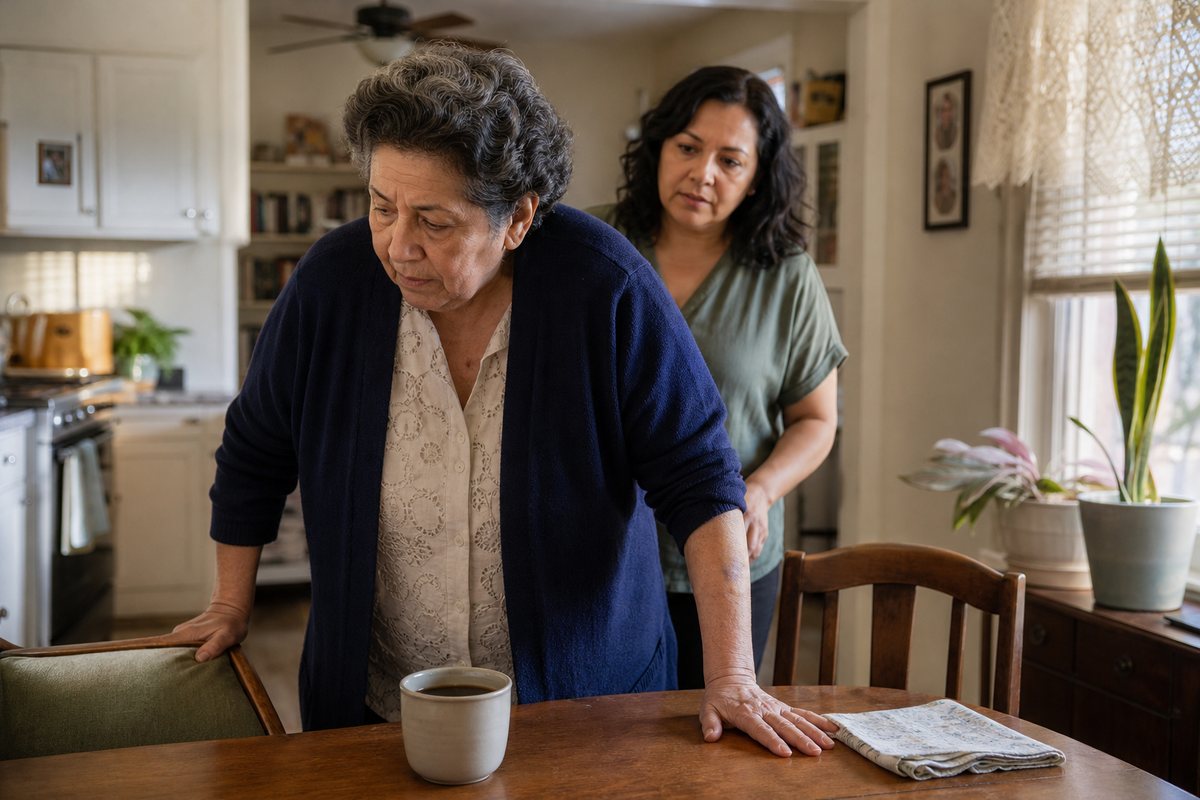
Watch them stand up from a low chair. Watch them on stairs. Notice whether they are holding the wall or the furniture as they move through a room, which people do without realizing it.
Look for bruising, particularly on forearms and shins, and particularly if the explanation is vague. Falls get minimized. A parent who has fallen once and not mentioned it will usually not mention the second one either.
How the house itself is doing
Compare it to how it used to be. Not to how you keep your own house.
A person who always kept a tidy house and no longer does is telling you something. So is a yard that has gone, or a car with new dents nobody can account for. Look at whether the smoke detectors are chirping, and whether anyone has noticed.
Conversation, not quizzing
You are not testing anyone. But over three days you will notice whether stories repeat within the same conversation, whether a familiar word goes missing and gets talked around, or whether a question gets asked twice in an afternoon.
What matters is change from their own baseline. Everyone forgets a name. A person who has always run the family’s finances suddenly saying “your father handles all that now” is a different thing.
And watch the person who lives with them. A spouse covering for the other spouse is extremely common and genuinely hard to see, because they are good at it and they have been practicing. Sometimes the caregiving spouse is the one in worse shape.
What to do with what you see
Here is the part I most want you to get right, because most families do the opposite.
Do not bring it up over dinner. Not with everyone there, and not at the table. That turns a worry into an ambush and guarantees a defensive response.
Do not open with the scary word. Nobody responds well to “Mom, we need to talk about assisted living.” Open with something narrow and concrete. The stairs. The car. One specific bill.
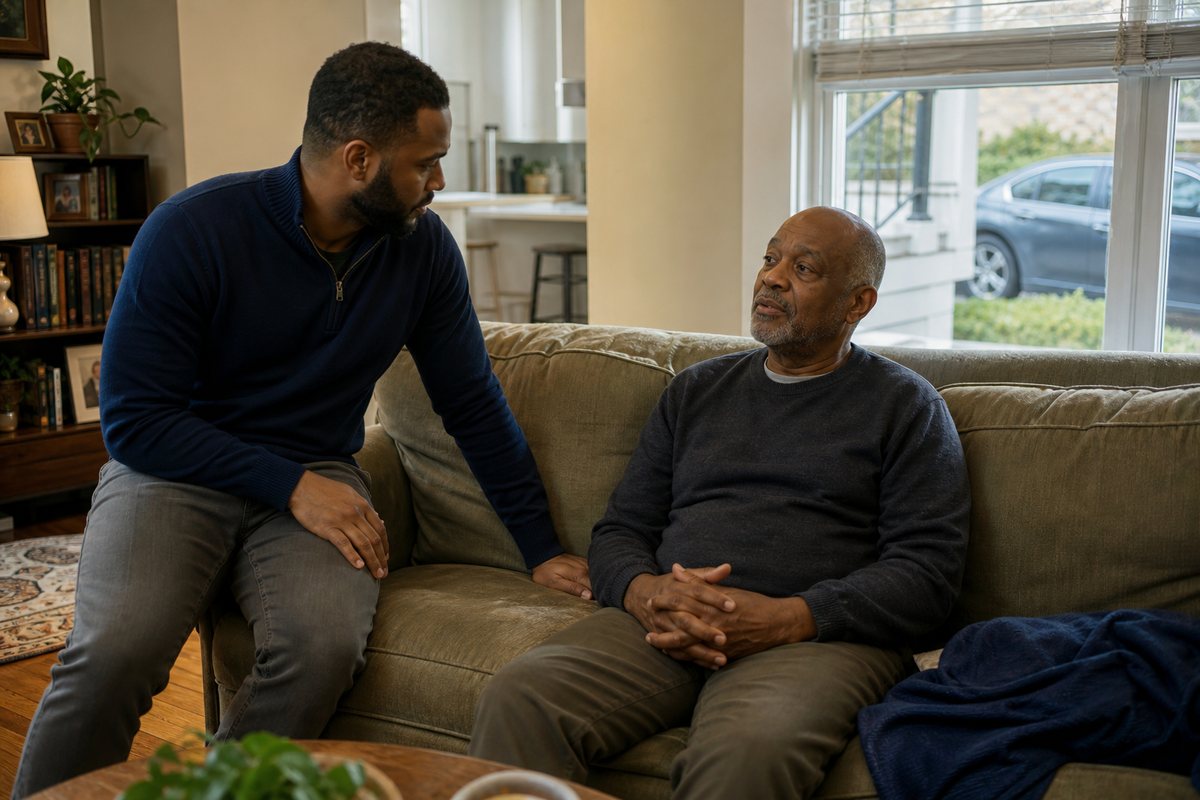
Ask instead of announcing. “What would you want to happen if you needed help getting around for a few months?” gets a better answer than any statement you could make. People defend their independence fiercely, and rightly. They are much more open to planning that they are in charge of.
Compare notes with your siblings afterward, not in front of your parents. You will each have seen different things, and the picture only assembles when you put them together.
The three questions actually worth asking
If you get a calm moment, these three are worth more than any list of symptoms.
If you had a medical emergency tomorrow, who would make decisions for you? If there is no answer, or if the answer is “you all would,” there may be no health care advance directive.
If you could not handle the bills for a few months, who would? If there is no answer, there may be no financial power of attorney, and without one the only route is a conservatorship petition in probate court.
Where are the documents? A plan nobody can find is close to no plan at all.
Three things to carry with you
Change from baseline is the signal. Not whether your mother forgets a name, but whether your mother is different from your mother.
One conversation, one topic, in private. The holiday is not the place for the whole agenda.
The documents are the urgent part. Care arrangements can be sorted out over months. The legal authority to act has to exist before the crisis, because afterward the only door left is the courthouse.
This Is Educational, Not Legal Advice
This is being presented for educational purposes only and nothing here should be treated as legal advice. What applies to you is very fact specific to your circumstances. I am licensed in Georgia and Michigan only, and this area of law changes frequently. If you are outside Georgia, take the foundation here and go find a wealth protection attorney in your jurisdiction.
Your Next Step
If what you see over the holiday worries you, you do not need to have it all figured out first. We offer a complimentary 15 minute Strategy Session with one of our non-attorney team members. Call 404-549-5001 or schedule online at elderlawgeorgia.com/contact. Fifteen minutes is usually enough to tell you whether there is something worth doing and how quickly it needs to happen.
Noticed signs during a holiday visit that your parents may need more help than they let on?
Looking to find an experienced estate lawyer in the Georgia area who is skilled in asset protection and estate plan preparation? Shannon Pawley is an attorney in Georgia with expertise in estate planning and asset protection. Shannon can provide assistance with creating an estate plan to include making a will and how to establish a trust properly. If you have questions about asset protection or questions about making an estate plan, reach out to Shannon and she will be glad to help answer all the estate planning questions you might have!